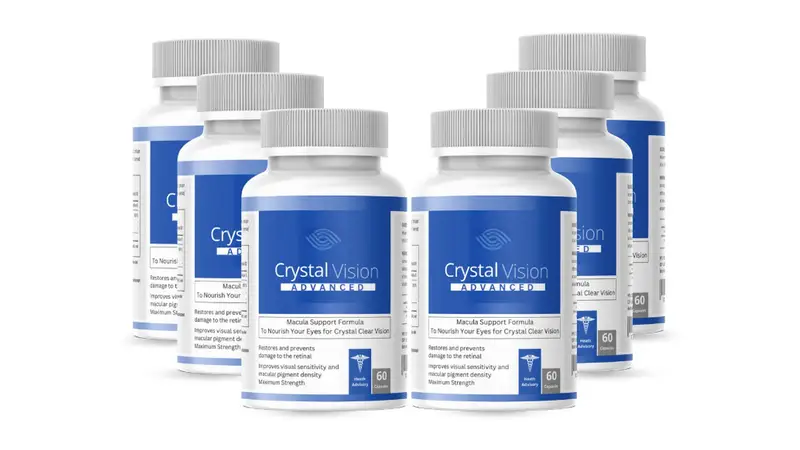
Crystal Vision review: a full eye vitamin with lutein, zeaxanthin and bilberry
Crystal Vision combines a clearly labeled vitamin and mineral base with lutein, zeaxanthin, bilberry and more, all in a two-capsule daily serving.
This article contains affiliate links. If you buy through them, we may earn a commission at no extra cost to you.
If you've ever stood in a pharmacy aisle trying to decide between an eye vitamin and a separate lutein product, Crystal Vision is built for you. It puts both in the same bottle.
The sales page tells a fun story along the way, including RAF pilots in the Second World War eating bilberry jam before night missions. But the part I found most useful is the supplement facts panel the company publishes right on the page. It's detailed, and it gives you a clear picture of what you're taking.
What's in a serving
A serving is two capsules, and a bottle holds 30 servings. The vitamin and mineral side of the label includes:
Vitamin C 200 mg and vitamin E 20 mg
Zinc 32 mg and copper 2 mg
Vitamin A (as beta-carotene) 100 mcg RAE
Thiamin 8 mg, riboflavin 8 mg, niacin 40 mg, B12 27 mcg and biotin 800 mcg
Smaller amounts of calcium, magnesium, selenium and chromium
Then there's a 481 mg eye blend made up of lutein, bilberry, alpha lipoic acid, eyebright, zeaxanthin, quercetin, rutin, L-taurine, grape seed extract and lycopene.
Why the design makes sense
Vitamin C, vitamin E, zinc and copper are the same core nutrients used in the large, long-running eye studies that shaped most modern eye formulas. Crystal Vision builds on that familiar base, with a zinc level that's a bit more moderate, which suits something you plan to take every day.
Lutein and zeaxanthin are the yellow pigments that naturally gather in the macula, the small spot at the back of the eye responsible for sharp central vision. You get them from leafy greens, egg yolks and corn, and plenty of people don't eat as much of those as they'd like. Having them in the same capsule as your vitamins is simply convenient.
The rest of the blend reads like a who's who of traditional eye ingredients. Bilberry is the berry from that wartime story. Eyebright is a small meadow flower used in European folk practice for the eyes. Grape seed, quercetin and rutin are plant antioxidants, and lycopene is the red pigment in tomatoes.
The company's take
The company says Crystal Vision helps the body "maintain a healthy macula thickness," supports healthy retinal pigment and helps keep the lenses clear. The page shares customer stories from people who say they can read small print more comfortably.
I like that the formula gives you a solid, familiar vitamin base to start from. For an eye supplement, that's a reassuring foundation, and the extras round it out nicely. As with any eye product, pair it with regular eye exams, which are still the best way to keep track of how your vision is doing.
Bundles and the 180-day guarantee
One bottle: $59
Three bottles: $52.33 each
Six bottles: $29.95 each, with free shipping
That six-bottle price is where Crystal Vision really shines. At $29.95 a month, you're paying about what you'd spend on a decent eye vitamin plus a separate lutein product, and you only have one bottle to remember.
The company backs every order with a 180-day money-back guarantee and says it will refund even empty bottles. Six months is a long time to decide, and it means you can take the full six-bottle supply for most of that period before making up your mind.
Who'll get the most from it
Crystal Vision makes the most sense for an older adult who already plans to take an eye-focused multivitamin and likes the idea of lutein, zeaxanthin and bilberry in the same capsule. It's especially handy if you're tired of juggling several bottles.
A quick housekeeping tip: if you also take a regular multivitamin, add up the zinc, vitamin A and B-vitamin totals so you aren't doubling up. If you smoke or used to, ask your doctor about the beta-carotene, and if your eye doctor has already recommended a specific formula, check with them before switching. Any sudden change in your vision is a reason to see an eye doctor promptly.
A label note: lutein, zeaxanthin, bilberry and seven other ingredients share a 481 mg proprietary blend, so the label doesn't say how much lutein or zeaxanthin you get, and eye research usually talks about those two in specific milligram amounts. The sales letter also spends time on NAC, which doesn't appear on the label image I reviewed.
If an all-in-one eye vitamin sounds like a good fit, the official Crystal Vision page lists the current bundle prices and full guarantee terms.
Read this next
 VisionPure Encapsulations Lutein/Zeaxanthin review: one simple daily capsule for your eyesPure Encapsulations keeps eye support simple: 10 mg of FloraGlo lutein and 2 mg of zeaxanthin in one vegetarian capsule a day, free from common allergens.