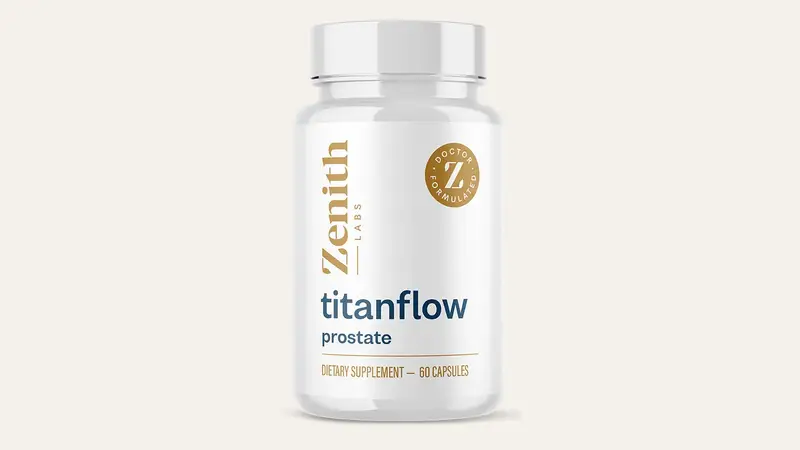
TitanFlow review: a pumpkin seed oil and pygeum prostate formula with a full label
TitanFlow from Zenith Labs is a two-capsule daily prostate formula with 500 mg pumpkin seed oil, pygeum, broccoli sprout, lycopene and beta sitosterol.
This article contains affiliate links. If you buy through them, we may earn a commission at no extra cost to you.
Most prostate supplements talk about the prostate. TitanFlow talks about the urethra, the small tube that carries urine out of the body. It's a fresh way to look at an old problem, and I enjoyed reading it.
The presentation comes from Dr. Ryan Shelton, a naturopath with Zenith Labs. He explains that as men age, the walls of the urethra can lose some of their strength, and that a particular plant oil can help them stay firm. That oil is pumpkin seed oil, which has been used for urinary comfort in Europe for decades.
Five ingredients, all dosed
Zenith Labs posts the full supplement facts panel, and I always like seeing that. A serving is two capsules, with 30 servings per bottle:
Pumpkin seed oil (Cucurbita pepo): 500 mg
Pygeum africanum bark extract 4:1: 100 mg
Broccoli sprout extract 4:1: 50 mg
Lycopene 5% from tomato skin: 37.5 mg
Beta sitosterol complex: 30 mg
The other ingredients are rice flour, silicon dioxide and vegetable magnesium stearate, in a gelatin capsule.
The two heavy lifters
Pumpkin seed oil at 500 mg is in the neighborhood of European studies on urinary symptoms, which often looked at 320 to 1,000 mg a day. Pumpkin seeds have been a folk remedy for men's urinary health for generations, particularly in central Europe.
Pygeum at 100 mg also sits close to the amounts used in older trials. It comes from the bark of the African cherry tree and has a long history of use for prostate comfort.
Those two together make a solid core. It's clear the formula was built around them on purpose.
Three helpers
Broccoli sprouts are a source of sulforaphane, a plant compound researchers love for its antioxidant activity. Lycopene is the red pigment in tomatoes, a long-time favorite in men's health products. Beta sitosterol is a plant sterol found in many seeds and nuts, and it shows up in plenty of prostate formulas.
Give it a few months
The company's FAQ talks about one to three months, which is a realistic timeline for a plant-based formula. Two capsules a day is easy to fit around breakfast or dinner. Pumpkin seed oil is a fat, so taking the capsules with a meal is a natural fit. Keep the bottle where you eat and it becomes automatic within a week or two.
Cost per bottle
1 bottle: $69, plus $9.95 US shipping
3 bottles: $177 ($59 each), plus $9.95 shipping, with two digital bonus books
6 bottles: $234 ($39 each), with free US shipping and two digital bonus books
At $39 a bottle, the six-pack is excellent value, and it covers the full one-to-three-month window with plenty to spare. The single bottle is there if you'd like to try it first.
ClickBank handles payment, and it's a one-time charge.
Six months of protection
TitanFlow's guarantee runs 180 days, and the company says it covers you even if the bottles are empty. That's longer than most prostate products I've looked at, and it gives you plenty of time to decide.
A checkup first
New urinary changes are worth a quick checkup and a PSA test before you start, if only to have a baseline, and blood in your urine, pain, fever or trouble emptying your bladder need a doctor promptly. If you already take a prostate prescription like tamsulosin or finasteride, ask your doctor before adding TitanFlow. The label notes it's for adults over 18.
Who'll appreciate it
Men who are noticing more bathroom trips, a weaker stream or a few too many night-time wake-ups, and who like seeing exact amounts on the label. With pumpkin seed oil and pygeum at meaningful doses and a half-year guarantee, it's a confident, straightforward choice.
To keep expectations fair: results in the pumpkin seed oil trials were modest, usually a few points on a symptom score, and beta sitosterol at 30 mg sits well below the 60 to 130 mg used in the trials usually cited for urinary flow. The page's urethra wall claims, including a flow improvement "by over 20%" and the "first in the world" line, lean on unnamed Johns Hopkins research with no study linked, and the finished product hasn't been tested. Frequent urination can also come from infection, diabetes, medication side effects or, less often, cancer, which is why the checkup comes first.
Read Dr. Shelton's full presentation and see today's prices on the official TitanFlow page.
Read this next
 ProstateGarden of Life Prostate+ review: probiotics, organic cranberry and vitamin D for menGarden of Life's Prostate+ combines 50 billion CFU from 15 probiotic strains with 500 mg of organic cranberry and whole food vitamin D3, formulated by Dr. David Perlmutter for prostate and urinary support.