Sports Research Magnesium L-Threonate with Magtein: the magnesium made for your brain
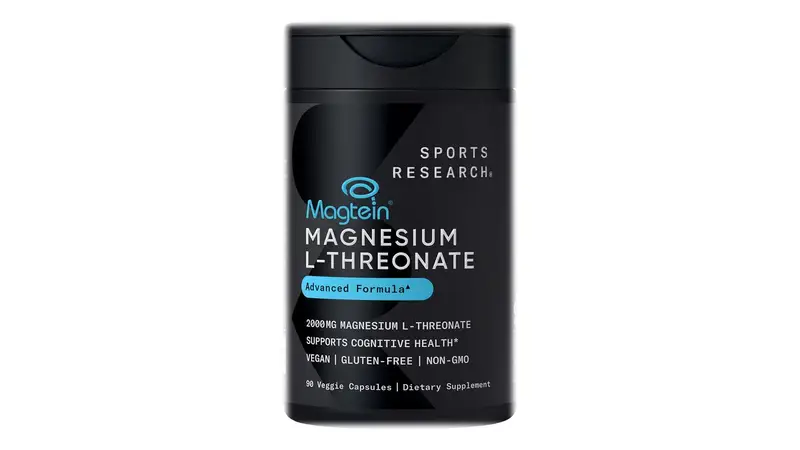
Sports Research pairs 2,000 mg of Magtein magnesium L-threonate with a clean veggie capsule, a form chosen for brain support, memory, focus and relaxation.
Where to buyThis article contains affiliate links. If you buy through them, we may earn a commission at no extra cost to you.
Magnesium is usually sold for sleep, muscles or that 3 p.m. jaw clench. This one has a different job in mind. It's a form chosen specifically with the brain in mind, and it has quietly become one of the most talked-about nootropic ingredients of the last few years.
Sports Research Magnesium L-Threonate uses Magtein, a patented magnesium L-threonate, at 2,000 mg per serving. Let me walk through why people pick it over the cheaper magnesium on the next shelf.
One mineral, many forms
Magnesium always comes bound to a partner. Oxide, citrate and glycinate are the ones you'll see most often, and each behaves a bit differently in the body. Magnesium L-threonate pairs the mineral with threonic acid, a water-soluble compound that comes from the natural breakdown of vitamin C.
Magtein was developed by a group of researchers at MIT. Sports Research says this form is able to cross the blood-brain barrier and raise magnesium levels in the brain, which is the whole reason it exists. Other forms are great for general magnesium needs. This one is the brain specialist.
What it's designed to support
According to Sports Research, people use these capsules for overall brain health, and they may help support:
Memory
Focus
Mood
Relaxation
Cognition in general
I like that combination. A lot of focus products lean on caffeine and leave you wired. Magnesium sits on the calmer side, so it suits people who want a clear head without the jitters. Some like it in the evening for that reason, since relaxation is on the list too.
The label
Short and tidy. Magnesium from 2,000 mg of magnesium L-threonate (Magtein), a hypromellose veggie capsule, and rice flour. That's all.
The capsules are verified non-GMO and free of gluten and gelatin, so they work for vegetarians. They're made in cGMP-compliant facilities in the United States from domestic and international ingredients. Sports Research has been around since 1980 and started as a small family business with a passion for fitness, which still shows in how plain its labels are.
Day-to-day use
The bottle holds 90 capsules, which Sports Research describes as a one-month supply. It was $29.95 when I checked. That's more than basic magnesium, but you're paying for the patented Magtein form, which is the whole point.
Here's how I'd fit it in. Pick a consistent time. If you take the full serving at once, try it in the evening with dinner and see how you feel. Some people prefer to split it between morning and night. Give it several weeks before you judge it, because this kind of support builds gradually. It won't feel like a cup of coffee, and it isn't meant to.
Pairing it with the brain basics makes a real difference too. Regular sleep, a walk outside, fish or other omega-3 foods, and time away from your phone. A supplement works best when it's helping a good routine rather than replacing one.
It also holds 4.8 stars from more than 3,000 Amazon shoppers, which is a strong showing in a category where people tend to be picky.
A few kind tips
If you have kidney disease, check with your doctor first, since your kidneys are what clear extra magnesium. Magnesium can also bind with certain antibiotics, like tetracyclines and quinolones, and with some osteoporosis medicines, so space them a few hours apart and ask your pharmacist. If you're pregnant or nursing, run it by your provider.
Worth a spot in your routine
If you're curious about nootropics but want something calm, simple and well researched, magnesium L-threonate is a lovely place to start, and this is a clean, trusted version of it. Have a look at Sports Research Magnesium L-Threonate and see if it suits your days.
As an Amazon Associate I earn from qualifying purchases.
Read this next
 NootropicsThorne Advanced DHA review: brain-focused omega-3 with 650 mg of DHAThorne's brain-focused fish oil puts DHA first, with 650 mg of DHA and 200 mg of EPA per serving in triglyceride form, mint flavored.